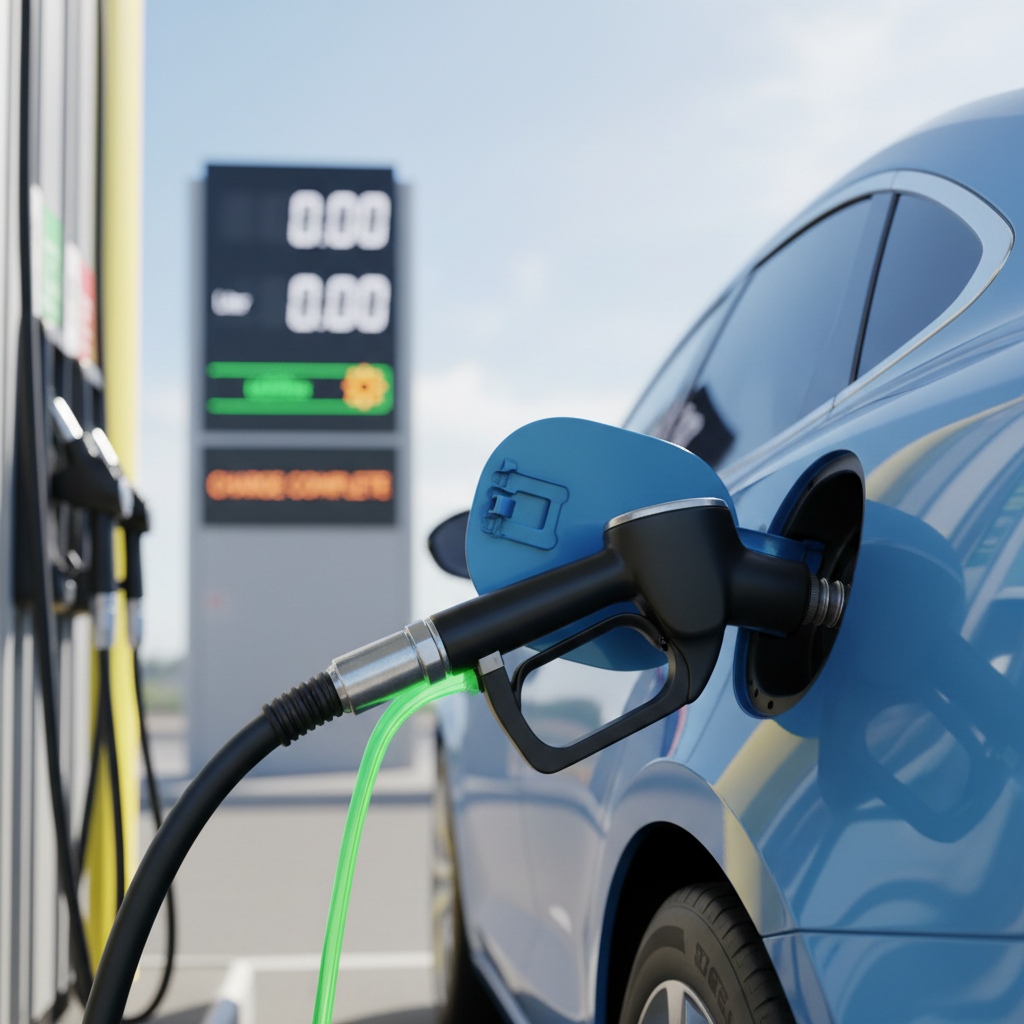
Petrol is not a luxury for many households. It is the price of arriving at work, doing the school run, visiting family, getting to appointments and earning an income. When prices rise, it can feel like another unavoidable deduction from your pay before you have bought groceries or paid rent.
That pressure is real. ABS figures released in August 2026 showed annual CPI inflation of 3.5% to July, with housing up 5.0% and food up 3.2%. At the same time, Finder reports that about 52% of Australians spend their pay before the next payday. In that setting, finding $20, $40 or $80 a month in transport savings matters.
You do not need a perfect low-cost lifestyle to reduce the fuel bill. You need to identify the parts you can control and make a few changes that suit your actual week.


Start with your real fuel number
Do not rely on a vague sense that petrol is “too expensive”. Work out what your car costs you now.
For two or three fill-ups, record litres bought, price per litre and kilometres travelled. Your fuel use is:
litres used ÷ kilometres travelled × 100 = litres per 100 km.
Say you drive 500 km a week and your car uses 9 litres per 100 km. That is 45 litres weekly. At $2.00 per litre, fuel alone costs $90 a week, or about $390 a month.
If you reduce driving by 75 km a week, you save 6.75 litres. At $2.00 a litre, that is $13.50 weekly, or roughly $700 a year. That is before considering less wear on tyres, servicing and parking.
Put the number in your budget as a weekly amount. If fuel is paid on a credit card and cleared later, still count it now. With average card rates around 20.99% p.a., according to RBA data cited by Money.com.au, petrol debt becomes far more expensive than the bowser price.


Buy smarter, not more
Petrol prices move in cycles, especially in capital cities. A price-comparison app or state fuel-price website can show nearby stations and help you avoid filling up at the most expensive servo simply because the tank is nearly empty.
Try this routine:
- Check prices once or twice a week, not every day.
- Fill up when your local area is comparatively cheap and you genuinely need fuel.
- Keep a buffer in the tank where practical, rather than waiting for the warning light.
- Compare the final price after any membership or supermarket discount.
- Avoid driving across town solely to save a few cents; the detour can erase the saving.
A 10-cent-per-litre difference on a 50-litre fill saves $5. That is worthwhile if the cheaper station is on your normal route. It is not worthwhile if you burn $3 of petrol and 25 minutes getting there.
Be careful with fuel dockets tied to extra grocery spending. A discount is only a saving if you would have bought those items anyway. Paying $20 more for groceries to save $4 on fuel leaves you worse off.

Cut kilometres without shrinking your life
The biggest savings often come from fewer kilometres, not chasing a tiny difference at the pump. Look for repeat trips that can be combined or replaced.
For example, a 12 km round trip to one shop, repeated three times a week, is 36 km. Add those errands to your commute or do them in one outing and the saving is modest each week but meaningful over a year.
Next, look at the commute. You may not be able to eliminate it, but one altered day can help. Could you work from home one day a fortnight? Carpool with a colleague once a week? Use public transport for the day you already need to be in the city? Start a little earlier to avoid stop-start traffic?
Illustrative example: Mia drives 40 km each way, five days a week: 400 km weekly. Her car uses 8.5L/100 km, and petrol costs $2.00 a litre. Her commute fuel costs about $68 a week. By carpooling one day and working from home one day each fortnight, she cuts 120 km a fortnight. That saves about $20 a fortnight in fuel, or more than $500 a year, before reduced wear and tear.

Make the car use less fuel
You cannot turn every vehicle into a hybrid, but basic maintenance prevents needless consumption. Check tyre pressures when tyres are cold, using the pressure listed on the driver-door placard or owner’s manual. Under-inflated tyres increase rolling resistance and wear out faster.
Remove heavy clutter from the boot, take roof racks off when they are not needed, and service the car on schedule. Accelerate smoothly, leave room to brake gradually and avoid long idling where it is safe and legal to switch off. These are not dramatic tricks; they are habits that reduce waste over thousands of kilometres.
If you are replacing a car anyway, compare real-world fuel consumption, insurance, servicing, tyre costs and finance—not just the sticker price. A cheaper used vehicle with poor efficiency can keep charging you every week. But do not take on a large loan merely to save fuel. Run the whole calculation first.

Give every saved dollar a job
Savings disappear easily if they stay in everyday spending. Set up an automatic transfer of a realistic amount—perhaps $15 or $25 a week—into a bills buffer or emergency fund on payday. If fuel spending comes in below budget, transfer the difference.
This is especially valuable when housing is already taking a heavy share of income. Mid-2026 Finder data says more than half of Australian mortgage holders spend over 30% of take-home pay on repayments, while Cotality put the national median weekly rent at a record $705 in July. Reducing fuel will not solve housing affordability, but it can stop transport costs from adding another layer of stress.
Pick one change this week: track your next fill-up, compare nearby prices, combine two errands, or ask about one flexible commute day. Small savings are still real savings, and a fuel bill you can predict is easier to live with.
This article is general information only and not personal financial advice.