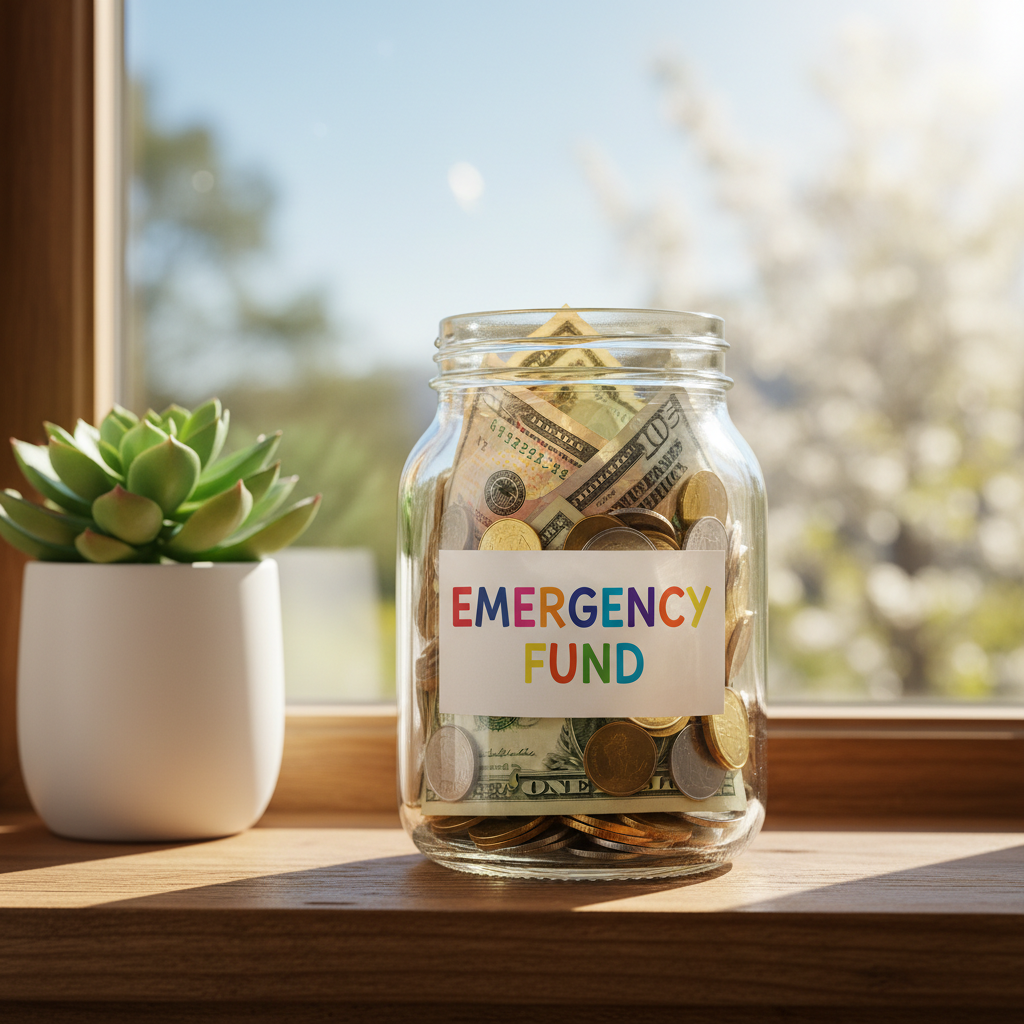
A burst tyre. A dentist appointment. A fridge that stops working two days before payday. These are ordinary problems, but without cash set aside they can become debt problems very quickly.
That is what an emergency fund is for: money reserved for genuine surprises and urgent income gaps. It is not a measure of whether you are “good with money”. It is a practical buffer between a bad week and a high-interest bill.
The need is real. Mid-2026 Finder data says about 52% of Australians spend their pay before the next payday. At the same time, the average credit-card rate is about 20.99% a year, according to RBA data cited in the August 2026 fact sheet. When there is no buffer, expensive credit can feel like the only available answer.


Why a small buffer can break the debt cycle
The debt cycle often starts with a one-off expense. Say your car needs a $700 repair. You put it on a card because there is no spare cash. If you then only manage the minimum repayment, interest keeps being added and the balance lingers. The next surprise lands before the first one is cleared.
A $700 emergency fund changes the decision. You pay the mechanic from cash, then rebuild the fund over the following weeks. It is still inconvenient, but it does not create a new monthly repayment.
Here is a simple comparison. A $700 card balance at 20.99% costs roughly $147 in interest over a year if the balance is left unpaid for that year. In real life, repayments and compounding change the exact figure, but the point stands: borrowing for an emergency makes the emergency more expensive. Using a buffer costs no interest.
Australian households are already carrying heavy pressure. Money.com.au reported total credit-card debt of $44.23 billion in August 2026, with $19.4 billion accruing interest. Canstar estimated that interest charges were running at roughly $10 million a day. Your emergency fund will not solve every cost-of-living problem, but it can stop a small shock becoming part of that larger debt pile.


How much should you aim for?
Ignore the idea that you must immediately save six months of income. That can sound impossible when rent, mortgage repayments and groceries are already stretching the budget. Start with a target that matches your risk and can be reached.
A useful ladder is:
- First $500: enough for many urgent bills, prescriptions, transport problems or a modest repair.
- Then $1,000: a strong starter fund for households with relatively stable work and no dependants.
- Then one month of essential costs: rent or mortgage, food, utilities, transport, insurance and minimum debt repayments.
- Build towards three to six months of essentials: especially if your income is variable, you are self-employed, have dependants, or work in an industry with uncertain hours.
For example, imagine your essential monthly costs are $4,200: $2,400 housing, $900 food and utilities, $450 transport and insurance, and $450 minimum debt payments. One month is $4,200. Three months is $12,600. Those are longer-term goals, not a reason to give up before you begin.
If you are a renter facing a $705 weekly median rent nationally, based on July 2026 Cotality data, your starting target might simply cover the excess on an unexpected move, medical bill or lost shift. If you have a mortgage, a buffer matters too: Finder says more than half of mortgage holders spend over 30% of take-home pay on repayments, while Roy Morgan found 29% were at risk of mortgage stress in May 2026.

Where to keep emergency money
Keep it safe, separate and easy to access. A high-interest savings account is usually the straightforward choice. Look for an account with no monthly fee and check any conditions needed to earn the advertised rate, such as a required deposit or limited withdrawals.
Do not put emergency savings in shares, crypto or anything that may fall in value right when you need the money. And do not lock all of it in a term deposit if breaking it would be difficult or costly.
A separate account with a clear nickname, such as “Car, health and job buffer”, helps stop it blending into everyday spending. If you use an offset account against a home loan, it can also be a sensible home for cash, provided you can access it quickly and will not accidentally spend it.

Build it fast without pretending life is cheap
The fastest reliable method is a small automatic transfer on payday. Treat it like a bill, but choose an amount you can keep doing.
If you save $40 a week, you reach $500 in 13 weeks. Save $75 a week and you reach it in seven weeks. A couple saving $50 each a week gets there in five weeks.
To find the first contributions, try a short “buffer sprint” for four to eight weeks:
- pause one or two optional subscriptions;
- plan cheap repeat meals and take lunch to work;
- sell unused items and send every dollar directly to the fund;
- direct overtime, a tax refund or a work bonus to the buffer;
- call insurers, phone providers and utilities to ask about cheaper plans;
- temporarily reduce extra debt repayments only after keeping every required minimum payment current.
The goal is not permanent deprivation. It is creating breathing room. Once the fund reaches $500 or $1,000, ease off if needed and keep a smaller automatic amount going.

Rules for using it — and rebuilding it
Use the fund for urgent, unplanned and necessary costs: essential repairs, medical gaps, emergency travel, a sudden loss of work, or a bill that prevents serious harm if unpaid. A planned holiday, sale purchase or annual registration bill is not an emergency; save for those separately with sinking funds.
When you use the money, do not see it as failure. That is its job. Pause other savings if necessary, set a rebuild amount and restart. If emergencies are happening often, examine the pattern: some “surprises” are predictable annual expenses that need their own small weekly savings category.
A modest emergency fund will not make high rents, mortgage stress or rising prices disappear. But it gives you time to think, choose and recover instead of reaching automatically for debt. Start with the next $20, $40 or $50. The first buffer is not small when it is the thing that stops panic becoming a bill you carry for months.
This article is general information only and not personal financial advice.